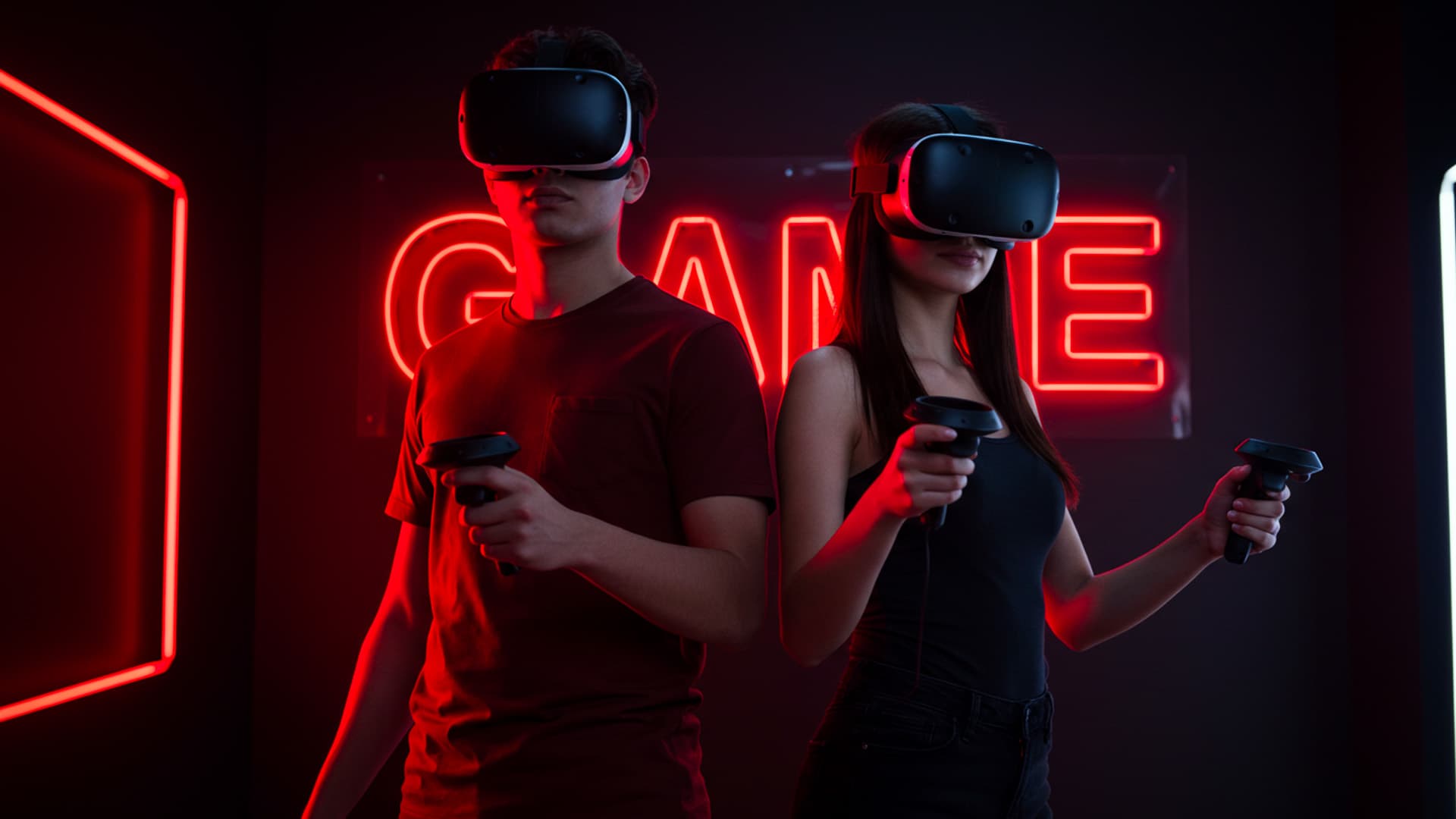
A Timeline of VR in Gaming
Virtual reality (VR) in gaming has had a fascinating journey, evolving from experimental prototypes to cutting-edge technology. In the 1990s, companies like Sega and Nintendo ventured into VR with devices like the Sega VR headset and the Virtual Boy, but both faced significant technical and commercial challenges. Despite these early setbacks, they paved the way for future developments.
Gaming as a Cultural Driver: How Virtual Reality Shaped the Evolution of Immersive Play
In the vast tapestry of gaming history, virtual reality has transitioned from an experimental novelty to a dynamic cultural phenomenon. Over the decades, gaming has served not only as a playground for technological innovation but also as a crucible for collective imagination. The evolution of VR reflects the spirit of creative risk-taking, where bold ideas merge with technical ingenuity to redefine the boundaries of interactive entertainment. This journey from the pixelated dreams of the Virtual Boy era to the richly immersive worlds of Half-Life: Alyx reveals how gaming continuously challenges our notions of presence and perception, reshaping our social and cultural landscape with every technological leap.
The Pioneering Era: Early VR Concepts and Experiments
The Virtual Boy’s Bold Leap
The Virtual Boy emerged as one of the earliest forays into the realm of VR gaming, daring to present a stereoscopic display that challenged the conventions of two-dimensional play. This system, albeit short-lived, captured the imagination of a generation eager to experience digital worlds in a way never seen before. Early adopters viewed the Virtual Boy as both a marvel and a misstep—a symbol of the high aspirations of its time. Despite its limitations, such as monochrome visuals and ergonomic challenges, its pioneering spirit set the stage for future innovations. This bold attempt at immersive gameplay sparked conversations about the potential of VR, igniting curiosity and debate among gamers and technologists alike.
In many ways, the Virtual Boy’s launch can be compared to the first tentative steps of an explorer charting unknown territories. Gamers of that era felt as though they were straddling two worlds: the familiar comfort of classic console gaming and the exhilarating promise of a new, immersive dimension. The device’s unusual design and ambitious vision served as a metaphor for the broader struggle between technological optimism and practical reality. It embodied the raw experimental energy that is crucial in any pioneering endeavor, paving the way for more refined and sophisticated VR experiences in the decades that followed.
Arcade Ancestors of Immersion
Arcades in the 1980s and 1990s offered an early glimpse into immersive gaming through specialized setups that invited players into interactive experiences beyond traditional screens. These experiences, often characterized by cabinet-based simulators and motion-enabled rides, represented the embryonic stage of VR as a communal phenomenon. In these venues, players encountered immersive displays that engaged multiple senses, creating a tangible sense of presence. This environment was akin to stepping into an alternate reality where the boundaries between the digital and physical blurred, evoking both wonder and a touch of trepidation. Arcades, as cultural hubs, catalyzed discussions on the future possibilities of virtual immersion in everyday entertainment.
These arcade experiments can be seen as the analog ancestors to modern VR headsets. The ingenuity behind these setups lay in their ability to engage players in an immediate, visceral manner. Much like a theatrical performance that captivates its audience, the arcade machines harnessed cutting-edge technology to provide a glimpse into an emerging era of interactive entertainment. The tactile feedback, dynamic visuals, and auditory cues combined to create a multi-layered experience that resonated deeply with players. This early experimentation, although limited by the technology of its time, laid a conceptual foundation that would inspire the technological breakthroughs in VR hardware and software in subsequent decades.
Console Curiosities and Niche Experiments
Beyond the arcade scene, console manufacturers and independent developers embarked on niche experiments that hinted at VR’s untapped potential. These early ventures, often experimental in nature, utilized modified controllers, rudimentary tracking systems, and inventive gameplay mechanics to simulate immersion. Developers explored ways to integrate three-dimensional perspectives and interactive feedback, often embedding VR-like features into games that otherwise adhered to traditional formats. These curiosities were not merely technical gimmicks; they were exploratory narratives that sought to bridge the gap between imaginative storytelling and emerging hardware capabilities. The pursuit of a more immersive gaming experience was a gradual evolution, marked by both triumphs and setbacks.
In these formative years, the spirit of experimentation was as integral to the industry as the technology itself. Gamers encountered titles that pushed the envelope, inviting them to consider gaming as an evolving art form. The integration of experimental VR elements into console games provided a preview of the potential inherent in immersive play. Developers balanced technical challenges with creative narratives, crafting experiences that were both daring and innovative. This period of niche experiments can be seen as a crucible where ideas were tested, refined, and sometimes discarded, all contributing to a growing collective vision of what gaming could become in a fully immersive virtual landscape.

Cultural Catalysts: Gaming's Role in Popularizing VR
Gaming as a Cultural Conduit
Throughout its evolution, gaming has functioned as a vital conduit for cultural expression and technological innovation. By providing interactive narratives and communal experiences, video games have helped shape societal perceptions of technology, especially within the VR realm. The cultural impact of gaming is visible in how immersive experiences have transcended mere entertainment to become influential art forms and social phenomena. Gamers have continually embraced virtual spaces as a medium to experiment with identity, explore fantastical worlds, and engage in collaborative storytelling. This dynamic interplay between technology and culture has driven both creative evolution and technological breakthroughs, positioning gaming at the forefront of VR’s mainstream acceptance.
The journey of VR in gaming is not just about hardware and software; it is about the human experience of being immersed in a different reality. This transformative power is comparable to stepping into a vivid painting where every brushstroke represents a moment of technological innovation or cultural insight. Gamers have long been the torchbearers of this movement, acting as both critics and connoisseurs of emerging trends. The role of gaming in popularizing VR is thus an intricate tapestry of cultural narratives, technical milestones, and shared experiences. By leveraging the power of interactive media, gaming has opened the door to a broader dialogue on the future of virtual environments, challenging us to rethink our relationship with technology and the world around us.
Shared Experiences and Community Formation
The evolution of VR in gaming has been inextricably linked to the formation of communities that share a passion for immersive experiences. Online forums, gaming conventions, and live streaming events have all contributed to a vibrant ecosystem where ideas and innovations are exchanged in real time. These platforms have transformed isolated experiments into collective experiences, fostering a sense of belonging among early adopters and enthusiasts alike. When players gather to discuss the latest VR breakthroughs or share their experiences in virtual worlds, they are participating in a cultural phenomenon that transcends geographic and generational boundaries. This communal engagement has amplified the reach and impact of VR, establishing it as a transformative medium in the cultural lexicon.
In many respects, these communal experiences serve as the lifeblood of VR’s evolution in gaming. Much like a town square in days gone by, modern digital spaces have become arenas where ideas and passions intersect. Gamers act as both audience and collaborators, each interaction adding a new layer to the narrative of virtual reality. The shared experience of exploring immersive worlds not only deepens personal engagement but also galvanizes the community to push for further innovations. This organic synergy between technology and social interaction has been a driving force in the evolution of VR, creating a feedback loop where cultural interest and technological advancements mutually reinforce each other, propelling the industry forward.
The Role of Iconic Franchises
Iconic gaming franchises have played a pivotal role in steering VR into the cultural mainstream. Titles that have captured the imaginations of millions have often served as benchmarks for innovation, inspiring both players and developers to envision new ways to interact with digital worlds. These franchises, through their evolution and adaptation, have illustrated how narrative depth and immersive gameplay can coexist with groundbreaking technology. In many ways, the success of these titles lies in their ability to weave compelling stories into a tapestry of interactive experiences. By pushing the limits of what is technically feasible, these games have contributed to a broader cultural acceptance of VR as a legitimate and exciting frontier in digital entertainment.
Imagine a world where the boundaries of reality are fluid, shaped by the interplay of narrative and technology. Iconic franchises have consistently provided that gateway, offering players a chance to inhabit richly detailed worlds that defy conventional gaming paradigms. Their influence extends far beyond the realm of entertainment; they have ignited imaginations and sparked dialogues about the future of digital interaction. This evolution is akin to the metamorphosis of a classic novel into an immersive, living experience, where every plot twist is not only observed but actively participated in. The cultural imprint of these franchises is a testament to their role in legitimizing VR as both an art form and a medium for communal expression.

Technological Milestones: Advancements in VR Hardware and Software
Hardware Innovations Paving the Way
The trajectory of VR in gaming is marked by significant hardware innovations that have steadily transformed immersive experiences. Early iterations, such as bulky headsets and clunky controllers, gave way to sleek, ergonomic designs that have revolutionized user interaction. Advances in display resolution, motion tracking, and haptic feedback have been crucial in diminishing the barrier between the physical and virtual worlds. Modern VR headsets now offer unparalleled levels of immersion, capturing subtle nuances of movement and delivering visuals that evoke genuine presence. These technological breakthroughs are akin to refining an ancient map into a high-resolution GPS that guides players through uncharted digital territories. Each innovation serves as a stepping stone toward a future where the line between real and virtual becomes ever more blurred.
The journey of hardware development in VR is a story of relentless iteration and technological perseverance. Engineers and designers have tackled the challenges of latency, comfort, and visual fidelity with a combination of scientific rigor and creative problem-solving. As devices become more compact and user-friendly, the accessibility of VR experiences expands to a broader audience. This progression mirrors the evolution of early mobile phones into today’s sophisticated smartphones, where each upgrade translates into improved functionality and user engagement. In the realm of gaming, these hardware innovations have not only enhanced the quality of play but have also redefined the expectations of immersive storytelling, setting new benchmarks for what is possible in digital entertainment.
Software Breakthroughs and Game Design
Equally transformative as hardware innovations, software breakthroughs have reimagined the possibilities of VR gaming. Cutting-edge game engines and advanced physics simulations have empowered developers to craft digital universes with unprecedented realism and interactivity. These technological strides have enabled a level of detail and narrative complexity that elevates VR from a mere technical curiosity to a compelling storytelling medium. Developers now weave intricate storylines into immersive environments where every object and character feels imbued with purpose. This synergy between robust software frameworks and creative design is reminiscent of an architect constructing a breathtaking edifice, where each digital brick is carefully placed to create a cohesive, awe-inspiring whole. The evolution of game design in VR has thus become a canvas for innovation, bridging the gap between imagination and technical mastery.
In practical terms, the software side of VR has opened new avenues for gameplay mechanics and interactivity that were once relegated to the realm of science fiction. Developers harness sophisticated algorithms to simulate realistic physics, dynamic lighting, and interactive environments that respond intuitively to player input. This transformation has given rise to experiences that are as much about narrative immersion as they are about technical prowess. The careful integration of sound, motion, and visual storytelling creates a layered experience that engages the mind and senses simultaneously. Much like a masterful symphony, the harmony of these elements in VR gaming invites players to not only witness a story but to live it, marking a paradigm shift in the design and execution of interactive entertainment.
The Integration of VR in Mainstream Titles
As VR technology matured, its integration into mainstream gaming titles signaled a major shift in the industry’s landscape. Pioneering developers began to weave VR experiences into well-established franchises, thereby transforming isolated experiments into widely accessible phenomena. The blending of traditional gameplay elements with immersive virtual environments introduced a paradigm where narrative and interaction coexist seamlessly. This fusion has had a profound impact on how players perceive and engage with digital content, turning gaming into an expansive realm of experiential storytelling. By leveraging robust VR frameworks, mainstream titles have transcended conventional boundaries, inviting players to participate actively in digital worlds that are as engaging as they are visually stunning.
This evolution is reminiscent of a bridge built between two islands of innovation—one rooted in classic game design and the other in cutting-edge immersive technology. Gamers now experience narratives that are layered with interactivity, where every decision can alter the course of the virtual journey. The integration of VR into popular titles has thus democratized access to immersive play, ensuring that the benefits of technological advancement are enjoyed by a diverse and ever-growing audience. It represents a critical juncture in gaming history, where the art of storytelling merges with the science of technology to create a holistic experience that captivates the mind, body, and spirit.

The Modern Renaissance: Half-Life: Alyx and the Future of VR Gaming
Narrative and Immersion Redefined
Half-Life: Alyx stands as a watershed moment in the modern VR landscape, redefining both narrative depth and immersive interactivity in gaming. This title embodies the culmination of decades of experimentation and technological evolution, delivering a story that unfolds seamlessly within a fully realized virtual environment. The game’s narrative complexity is interwoven with its immersive mechanics, inviting players to explore a world where every gesture and interaction feels profoundly meaningful. In Half-Life: Alyx, storytelling transcends traditional boundaries, transforming the act of play into a visceral experience where the narrative itself is an active participant in the gameplay. Its success lies in its ability to merge artful narrative design with the latest VR innovations, creating a benchmark for future titles.
The game’s design is a masterclass in the integration of narrative and technology, where each element is meticulously calibrated to enhance player immersion. Imagine stepping into a living, breathing world where the details of every environment beckon exploration and every sound cues an emotional response. This is the promise of Half-Life: Alyx—a game that uses virtual reality as a lens to magnify storytelling, making the virtual tangible and the narrative experiential. Its groundbreaking approach has spurred developers to reimagine what is possible in interactive storytelling, pushing the boundaries of conventional gaming and inspiring a new era of creative exploration. The legacy of Half-Life: Alyx will undoubtedly resonate for years to come, serving as a touchstone for the future evolution of VR gaming.
The Confluence of Art and Technology
In the realm of modern gaming, the confluence of art and technology is vividly illustrated by the advent of immersive VR experiences. Half-Life: Alyx serves as a prime exemplar of how technological sophistication can amplify artistic expression, creating a medium that is as visually captivating as it is narratively rich. The game’s intricate design and atmospheric storytelling evoke comparisons to classic cinematic masterpieces, yet it achieves these effects through interactive, player-driven mechanics. Every element of its design—from the texture of its virtual environments to the subtleties of ambient sound—demonstrates a harmonious integration of technical precision and creative vision. This fusion is not merely a testament to advanced engineering but a celebration of the artistic potential inherent in digital media, where innovation is the brush and the virtual world the canvas.
The interplay between technology and art in Half-Life: Alyx creates an experience that resonates on multiple levels. Gamers are invited to participate in a narrative that is both technically advanced and emotionally engaging, much like becoming part of a living painting where every stroke is imbued with meaning. The game's ability to evoke genuine emotional responses while showcasing state-of-the-art virtual reality mechanics is a reflection of the broader trend towards interdisciplinary creativity in gaming. This synthesis of form and function has set a new standard for what immersive storytelling can achieve, inspiring a generation of developers to explore the boundless possibilities at the intersection of art and technology. It is a vivid illustration of how the future of gaming lies in the seamless integration of aesthetic elegance and technical mastery.
Imagining Future Realms
Looking forward, the future of VR gaming brims with potential as developers continue to push the envelope of interactive storytelling. Envision virtual worlds that evolve dynamically based on player choices and real-time environmental feedback—a symphony of artificial intelligence, narrative branching, and hyper-realistic graphics. The trajectory set forth by Half-Life: Alyx hints at an era where immersive play transcends the limitations of current technology, inviting players to inhabit realms that are as unpredictable as they are captivating. This vision is not confined to the realm of speculative fiction; it is a natural extension of decades of iterative innovation in both hardware and software. As VR technology becomes more accessible and refined, the possibilities for storytelling and engagement will only multiply, redefining our understanding of interactive media.
This promising future is like an uncharted ocean of creativity, where each new technological breakthrough serves as a navigational star for developers and players alike. The boundaries of virtual reality are expanding, fueled by relentless innovation and the collective imagination of a global community of creators. Gamers can look forward to experiences that are richer, more adaptive, and deeply personal—where the virtual environment evolves in real time to reflect the intricacies of human emotion and decision-making. The merging of advanced AI, sensor technology, and narrative design is poised to unlock experiences that are both immersive and transformative. As we stand on the cusp of this new digital renaissance, the future of VR gaming promises to be a journey into realms that are as boundless as the imagination itself.
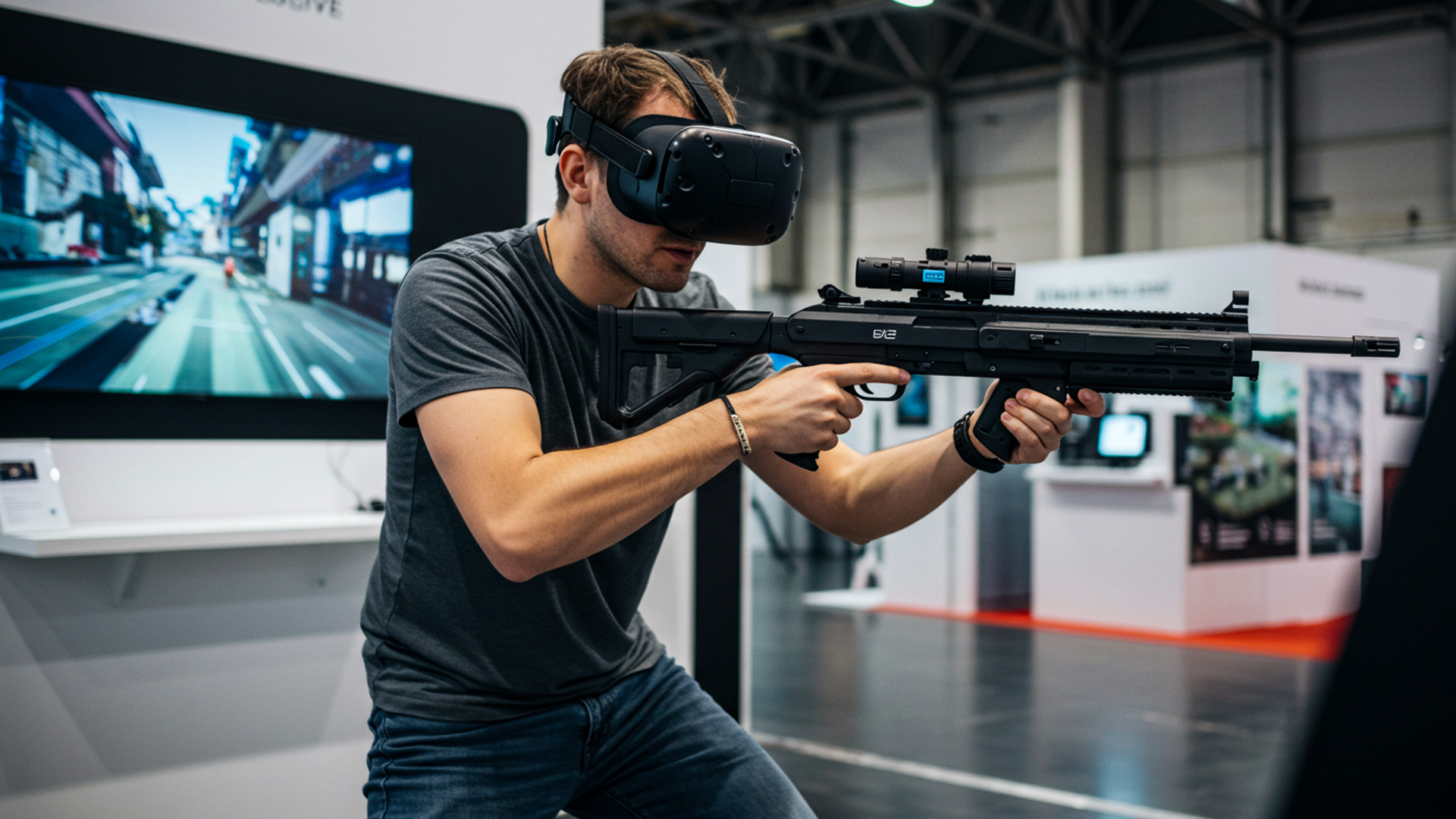
Alyx And The Future Of Vr Gaming
Author: Elisha Roodt
Sharing the best of Virtual Reality Durban with local VR experiences, events, and immersive tech insights from Durban and KwaZulu-Natal.