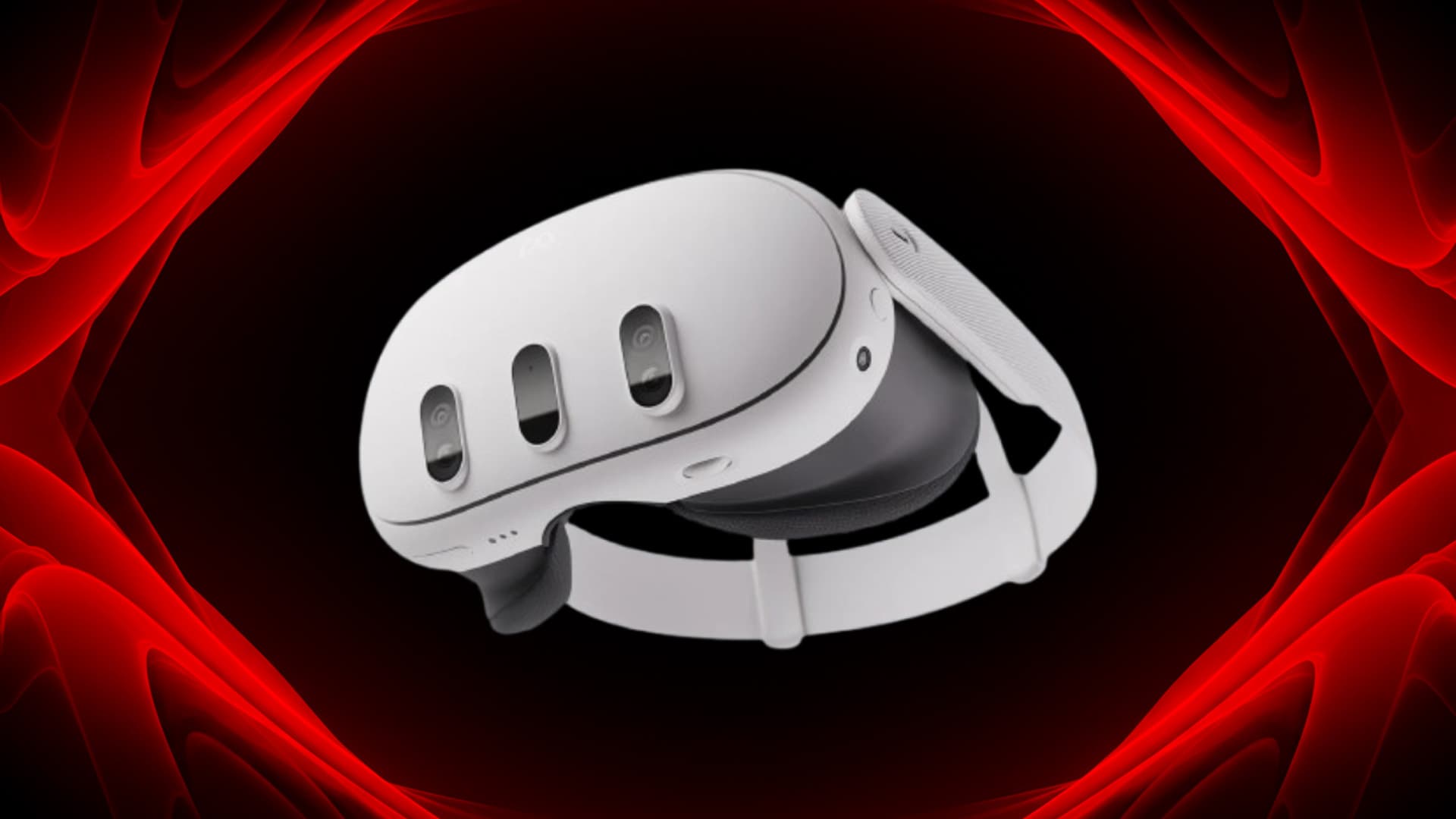
Is It Still Worth Buying the Quest 3 in 2025, or Should You Wait for Quest 4?
Exploring the Crossroads of Today’s VR Market Every technology cycle has its moment of reckoning—the stage where enthusiasts and newcomers alike...
Exploring the Crossroads of Today’s VR Market
Every technology cycle has its moment of reckoning—the stage where enthusiasts and newcomers alike pause to ask whether the present is enough or if the next chapter promises a revolution. The Meta Quest 3, launched with fanfare and refined with continuous software updates, sits in this exact space in 2025. For some, it’s the gateway to immersive worlds and boundless creativity. For others, it feels like a stepping stone on the path toward the inevitable Quest 4. Picture standing at a fork in the road: one path offers stability, reliability, and proven experiences; the other hints at innovation but remains fogged with uncertainty. That’s the dilemma we’ll unravel—whether it’s wiser to seize the Quest 3 today or hold out for what’s next.
Virtual reality has always thrived on cycles of anticipation and adoption. Every few years, hardware breakthroughs promise to redefine immersion, leaving consumers in a quandary. The Quest 3, despite being two years old, has aged remarkably well, but the looming prospect of the Quest 4 has created a cloud of indecision. This article journeys through performance, immersion, content, and cost considerations, weaving stories, analogies, and real-world comparisons to illuminate whether Quest 3 still deserves a spot in your entertainment arsenal—or whether waiting might be the smarter move.
Performance and Hardware Longevity
Processing Power in a Shifting Landscape
The Quest 3’s Snapdragon XR2 Gen 2 chipset still delivers responsive, fluid gameplay, balancing graphical fidelity and energy efficiency. It’s like driving a finely tuned sports car from a few years back—it doesn’t break records anymore, but it still outpaces most vehicles on the road. In practical terms, the processing headroom is more than adequate for the majority of VR apps in 2025, including demanding social platforms and graphically rich rhythm games. Developers continue to optimize for Quest 3, ensuring it remains central in the ecosystem.
However, the underlying tension comes from the whispers surrounding Quest 4’s potential silicon. Rumors point to custom chips designed for AI-enhanced rendering, foveated tracking, and even photorealistic virtual environments. If true, Quest 3 may feel like a seasoned performer standing on stage while a new headliner readies in the wings. For users wanting longevity, this uncertainty gnaws. Will the current processing power suffice for three more years, or will the next generation render it archaic within one?
Optics and Display Experience
The pancake lenses of the Quest 3 are a triumph compared to the older Fresnel optics, delivering sharper visuals, reduced glare, and a slimmer profile. Imagine replacing foggy glasses with crystal-clear lenses—the clarity transforms not just the view but the emotional connection to virtual spaces. Whether sculpting in VR art tools or engaging in cinematic experiences, the immersive quality is striking and often underestimated until experienced firsthand.
Yet, the VR industry moves with relentless speed. Speculation about Quest 4 points to micro-OLED displays, offering higher contrast ratios and potentially eliminating the “screen-door effect” entirely. This leap could be as dramatic as shifting from VHS tapes to Blu-ray discs. The question then becomes whether one is satisfied enjoying a great picture today or compelled to wait for the inevitable next big leap in visual fidelity tomorrow.
Durability and Ecosystem Support
Hardware’s longevity isn’t just measured in silicon or optics; it’s also tethered to community and developer support. The Quest 3, two years into its lifecycle, enjoys a rich library of applications, thriving multiplayer environments, and a loyal modding community. In many ways, owning a Quest 3 in 2025 is akin to moving into a bustling neighborhood—friends are always nearby, and the ecosystem is alive with constant activity.
Nonetheless, durability is not immune to obsolescence. If Meta shifts its primary development efforts toward Quest 4, users may gradually find the updates thinner, exclusive titles limited, and cross-compatibility strained. It’s a familiar story: just as smartphone users saw older models wither in the shadow of newer devices, VR hardware too may face the silent march toward irrelevance. The Quest 3, while strong today, may eventually feel like yesterday’s flagship.
Immersion and User Experience
Mixed Reality as the Gateway to Adoption
The Quest 3 expanded mixed reality capabilities, blending virtual overlays with a clearer, more natural passthrough. Imagine your living room morphing into a medieval castle, yet still being able to grab your coffee mug resting on the table. This interplay is not just gimmickry; it lowers barriers for newcomers intimidated by full immersion, creating hybrid spaces where reality and imagination coexist seamlessly. For educators, designers, and casual gamers, the benefit is transformative.
At the same time, the feature remains in its adolescence. The passthrough fidelity, though sharper than Quest 2, still exhibits graininess and color inaccuracies under low light. Future headsets may perfect this transition, turning your environment into a near-photorealistic digital canvas. In that sense, the Quest 3 is like an early sketch of a masterpiece—promising, impactful, but leaving room for refinement in the final strokes.
Comfort and Wearability
One of the Quest 3’s understated victories is its reduced bulk and improved weight distribution. The shift from clunky, front-heavy designs to a sleeker, better-balanced frame makes longer sessions more bearable. Think of the difference between wearing a heavy miner’s helmet and a lightweight cycling visor—the comfort changes how often and how long you want to engage. For marathon VR users, this ergonomic refinement is a game-changer.
Yet, perfection remains elusive. Extended use can still strain neck muscles, and users with glasses may find the fit frustrating. The promise of modular, adjustable designs looms on the horizon, and if Quest 4 delivers a lighter, customizable form factor, Quest 3 may appear more transitional than timeless. In this regard, the headset’s comfort is a solid step forward, but perhaps not the final destination.
Haptics and Sensory Integration
The Quest 3’s controllers offer refined haptics that simulate textures, collisions, and environmental cues. It’s like replacing a black-and-white sketch with a color painting—the added dimension of tactile feedback deepens immersion beyond what visuals alone can achieve. When playing a VR archery game, the subtle vibration of a drawn bowstring enhances believability, anchoring players inside the virtual world with sensory nuance.
However, more advanced haptic gloves and finger-tracking systems are on the horizon, potentially redefining interactivity. Waiting for Quest 4 might mean skipping controllers altogether, embracing a future where every gesture feels natural and direct. If the Quest 3 haptics are akin to learning music on a finely tuned piano, then Quest 4 may offer the equivalent of a full orchestra at your fingertips. That leap is enticing, even if today’s experience is already impressive.
Software Ecosystem and Content Pipeline
Exclusive Titles and Expanding Libraries
Content is the lifeblood of any platform, and Quest 3’s library is robust in 2025. From narrative-driven epics to creative sandboxes, the breadth feels akin to walking into a vast bookstore—every genre, every interest, something for everyone. Developers continue to design specifically for Quest 3, ensuring rich performance without sacrificing depth. For the everyday gamer, the options remain overwhelming in the best possible way.
Still, the arrival of Quest 4 could shift the tide dramatically. Studios may pivot toward leveraging advanced features exclusive to the new platform, slowly leaving Quest 3 users behind. It’s a familiar technological cycle: what feels like abundance today might evolve into scarcity tomorrow. Choosing Quest 3 is choosing security in the present, but perhaps at the expense of cutting-edge exclusives in the near future.
Cross-Compatibility and Backward Support
Meta has historically emphasized backward compatibility, ensuring older devices retain access to key applications. For Quest 3 owners, this is reassurance—a promise that your investment won’t vanish overnight. It’s much like purchasing a car knowing that the manufacturer will still supply parts for years to come. The VR ecosystem thrives on inclusivity, where communities flourish across multiple hardware generations.
Yet, history also suggests that such support eventually wanes. Features that define Quest 4 may remain inaccessible to Quest 3, creating subtle divides in user experience. This divide is not catastrophic, but it’s the slow erosion of relevance. Owning Quest 3 in 2025 guarantees vibrant participation now, but the long-term road could be marked by gradual exclusion from next-generation experiences.
The Indie Advantage
One overlooked strength of the Quest 3 ecosystem is its embrace of indie developers. Small studios, experimental creators, and hobbyists find in Quest 3 a fertile playground. It’s similar to how garage bands sometimes produce the most authentic music—independent voices unburdened by corporate agendas. This diversity ensures that Quest 3 users aren’t merely passive consumers but explorers in a digital frontier of creativity.
But indie developers too follow incentives. If Quest 4 opens new capabilities, such as eye-tracked rendering or advanced mixed-reality layering, they may pivot, leaving Quest 3 in the rearview mirror. In that light, Quest 3’s indie advantage is strong but fragile, contingent upon the gravitational pull of the next generation. Choosing Quest 3 means enjoying today’s indie renaissance while acknowledging the fragility of tomorrow’s support.
Financial Considerations and Timing
The Value Proposition Today
With price drops and frequent bundles, the Quest 3 represents strong value in 2025. For families, educators, or startups experimenting with immersive platforms, the affordability is compelling. Think of it as buying last year’s flagship smartphone—it may lack the flashiest specs, but the price-to-performance ratio is unmatched. For many, this alone is reason enough to jump in now rather than wait.
Financially, the Quest 3 is less a gamble and more a safe investment in VR’s present. Unlike waiting for the elusive Quest 4, which may debut at a premium price, Quest 3 provides access without the anxiety of overspending. The headset serves as an accessible bridge for anyone who wants VR now, without the shadow of speculative costs weighing them down.
The Cost of Waiting
Patience often comes with hidden costs. Waiting for Quest 4 means missing out on experiences, memories, and opportunities in 2025. Imagine standing outside a concert hall, tickets in hand, but choosing to wait for the band’s next tour—you miss the thrill of the performance today. VR isn’t just technology; it’s lived moments. And those moments, once passed, cannot be reclaimed.
Yet, the reverse argument is equally valid. Waiting could mean enjoying a headset that is leaps ahead, avoiding buyer’s remorse. The real cost is opportunity versus innovation, and each user must weigh what they value more: immediate gratification or future-proofing. For some, living in the now is worth the premium of lost potential. For others, foresight justifies the wait.
Resale and Upgrade Cycles
The resale market for VR hardware is another angle. Quest 3 units, still highly demanded in 2025, can fetch reasonable secondhand prices, reducing the financial sting of upgrading later. Much like trading in a used car, the depreciation curve is gentler when the product remains relevant. For buyers with upgrade anxiety, this makes Quest 3 a safer bet—the headset won’t become e-waste overnight.
Still, resale is not a perfect shield. Market saturation can quickly erode secondhand values once Quest 4 floods the market. Timing becomes everything: sell too late, and your device may be worth a fraction of its purchase. Thus, the Quest 3’s financial calculus is less about absolute numbers and more about strategic timing, where anticipation and execution intertwine like a delicate dance.
Author: Elisha Roodt
Sharing the best of Virtual Reality Durban with local VR experiences, events, and immersive tech insights from Durban and KwaZulu-Natal.