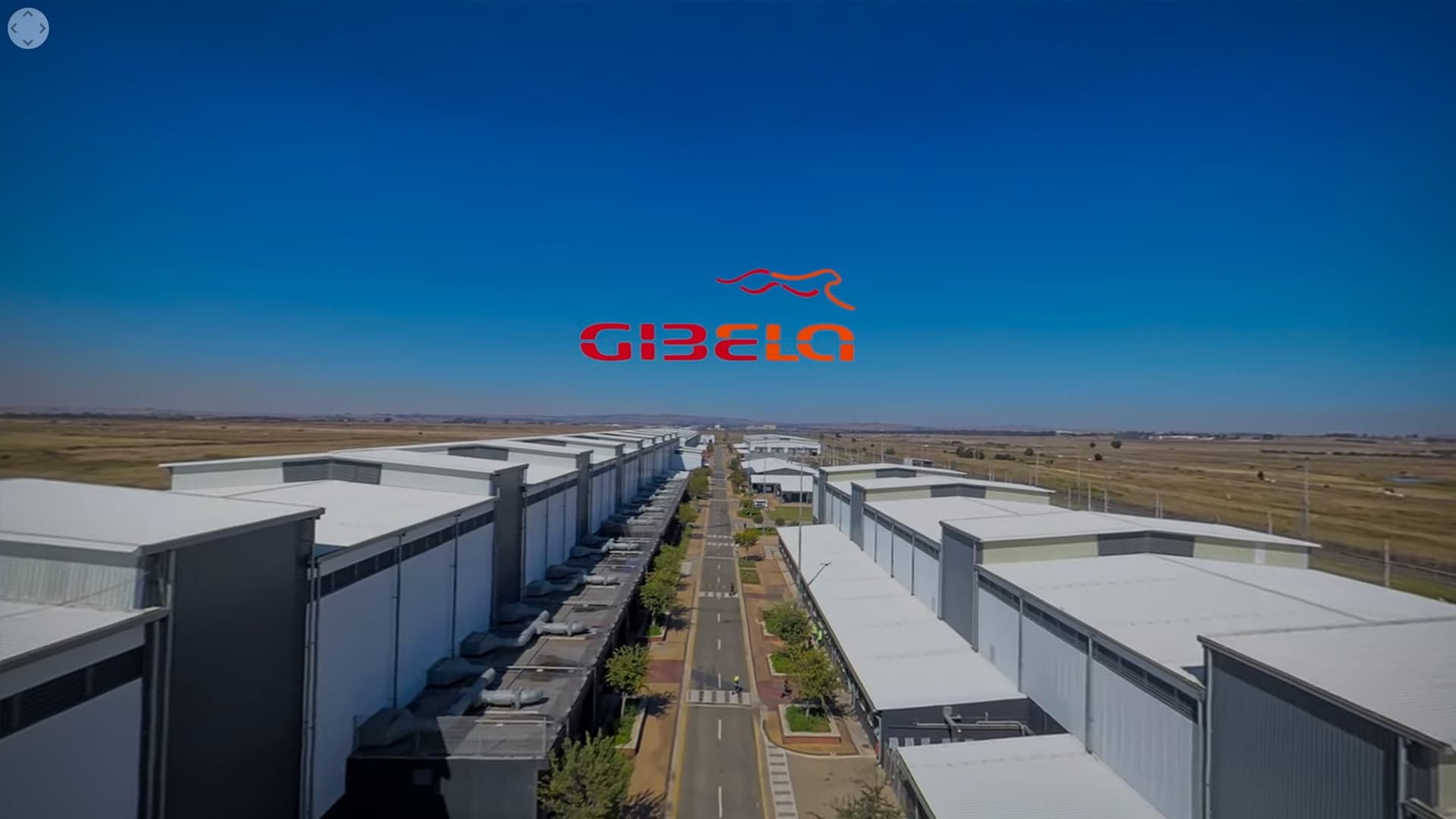
Inside Gibela’s Rail Transformation
How We Captured South Africa’s Train Manufacturing Process at Gibela with Immersive 360° Technology Virtual Reality Durban specializes in...
How We Captured South Africa’s Train Manufacturing Process at Gibela with Immersive 360° Technology
Virtual Reality Durban specializes in producing high-quality 360° videos that immerse viewers in real-world environments. Our latest project, takes audiences inside Gibela’s cutting-edge train manufacturing facility. It highlights how Gibela builds modern commuter trains for South Africa—demonstrating every major step, from raw steel processing to final testing. This immersive learning resource allows viewers to witness manufacturing workflows, safety protocols, and technological innovations in a comprehensive, interactive format. Through this article, we explain our approach, the key stages of construction featured, and the broader educational and industry implications of creating such a 360° experience.
360° Video
Overview of the Gibela Rail Project
Gibela is a joint venture formed between the Gibela Rail Transport Consortium and the Passenger Rail Agency of South Africa (PRASA) to design, manufacture, and deliver state-of-the-art electric commuter trains—known as X’Trapolis Mega trainsets—for South African rail networks. The contract requires building over 600 trainsets that improve commuter safety, capacity, and energy efficiency. Key stakeholders include global engineering firms such as Alstom, combined with local partners to meet PRASA’s local content requirements. By establishing a manufacturing facility in KwaZulu-Natal, Gibela aims to transfer technical knowledge, create skilled employment opportunities, and strengthen the local supply chain for rail components.
The facility produces everything from steel-fabricated bodyshells to final trainset assembly under one roof. Design engineers, fabricators, welders, assembly technicians, and quality assurance teams work in tandem to ensure each train meets rigorous international standards. Our 360° video captures this collaborative ecosystem—showing how raw materials enter the factory, how they are transformed into structural components, and how final testing confirms each train’s readiness for service on PRASA lines. The visual narrative emphasizes the socio-economic impact of local manufacturing: job creation, supply chain diversification, and future-proof commuter rail infrastructure.
Purpose of the 360° Video
The primary goal of this 360° video is educational: to provide students, industry professionals, and rail enthusiasts with an immersive window into modern train manufacturing. Traditional two-dimensional videos and still images can only convey limited perspectives. By contrast, a 360° presentation enables viewers to control their viewpoint—turning their heads to examine welding stations, movement of overhead cranes, or technicians calibrating traction motors. This interactivity fosters deeper understanding of complex engineering workflows and safety protocols that might be missed in conventional footage.
Beyond education, the video also serves as a marketing and stakeholder-engagement tool. PRASA and Gibela can share the immersive tour on corporate websites, training portals, or at trade exhibitions—demonstrating transparency, engineering prowess, and commitment to local development. By documenting each manufacturing stage, the video can be repurposed for training modules—allowing new employees to familiarize themselves with factory layouts, equipment, and best practices before setting foot on the production floor. Ultimately, this immersive content bridges the gap between digital knowledge transfer and real-world industrial operations.
Filming the Train Manufacturing Process
Preparations and Safety Protocols
Filming inside an active train factory demands meticulous planning and strict adherence to safety standards. Before any cameras rolled, Virtual Reality Durban’s production team collaborated with Gibela’s safety officers to conduct a full risk assessment—identifying potential hazards such as heavy machinery, welding arcs, and moving cranes. All crew members underwent site-specific safety training, receiving instruction on wearing personal protective equipment (PPE) including hard hats, steel-toed boots, flame-resistant clothing, and hearing protection. We established clearly marked “safe zones” for camera operation, ensuring that the 360° rig did not interfere with the flow of material or pose risks to operators and technicians.
Filming schedules were carefully coordinated around factory operations to capture critical manufacturing processes without causing disruptions. For example, welding cells were temporarily re-routed to create open spaces for camera placement, and assembly bays with heavy traffic were scheduled during lower-intensity hours. By integrating our timeline with Gibela’s production plan, we minimized downtime and ensured that every step—from steel cutting to final testing—was documented comprehensively. Additionally, a safety officer from Gibela accompanied our crew at all times, granting permissions to move between restricted areas and pausing filming if any urgent maintenance or safety concerns arose.
Camera Setup and Equipment
To achieve full 360° coverage, we used a multi-lens spherical camera rig—comprising eight synchronized cameras capturing in 8K resolution per eye. Mounted on a stable tripod with a low-profile footprint, the rig allowed for unobstructed recording in busy factory aisles. In areas with limited floor space, we employed a telescopic monopod to position the camera slightly above ground level—providing a clear line of sight to overhead gantry cranes and ceiling-mounted conveyors. Each camera’s exposure settings were manually calibrated to account for the factory’s uneven lighting, where bright welding arcs and dim assembly lines coexisted.
Audio capture is equally vital for immersion. We synchronized ambisonic microphone arrays—four-capsule setups that record directionally accurate sound fields. These microphones were placed near machine operation points to capture the hum of CNC cutters, the sizzle of welding arcs, and the clatter of assembly bay activities. In post-production, ambisonic tracks enable dynamic audio rendering: when a viewer looks toward a welding station, the welding noise intensifies; turning away from it shifts focus to ambient background sounds. This spatial audio layering greatly enriches the immersive experience, making viewers feel as though they are standing amidst the factory floor rather than merely observing it.
Capturing Key Manufacturing Steps
The 360° video chronicles every major phase of Gibela’s train manufacturing process. First, we filmed raw steel stock receiving—where large steel plates arrive via truck and are staged for cutting. Next, viewers see CNC plasma and laser-cutting tables automatically slice sheets into precise shapes for underframes, bodyshells, and reinforcement brackets. Care was taken to capture craftsmen marking steel with precision measuring tools, highlighting the balance between automated and manual operations.
Subsequent segments showcase welding stations: robotic arms performing high-volume welds on chassis frames followed by manual TIG and MIG welds for complex joints and interior supports. We positioned cameras to capture sparks flying, welders inspecting bead quality, and quality-control inspectors using handheld ultrasonic testers. In the assembly bays, footage reveals bogie assembly—technicians fitting wheelsets, installing suspension components, and mounting hydraulic brake units under chassis subframes. Finally, we document systems integration, where traction motors, high-voltage inverters, and pantographs are installed; interior modules are fitted; and dynamic test runs are conducted on a dedicated test track. Each of these steps is presented as a distinct chapter in the video—allowing viewers to pause and explore details at their own pace.
https://www.youtube.com/watch?v=PxIcN6FUmPs
Key Stages in Train Construction Shown in the Video
Fabrication and Welding
At the heart of train manufacturing lies the fabrication and welding of steel components. In our video, viewers witness how raw steel plates—sourced from local mills—are inspected for flatness and thickness before being sent to automated CNC cutting tables. These tables employ plasma-arc or laser cutting heads to trim plates to the exact dimensions specified by CAD models. Precision is critical: misaligned panels can compromise the structural integrity and aerodynamics of the final trainset.
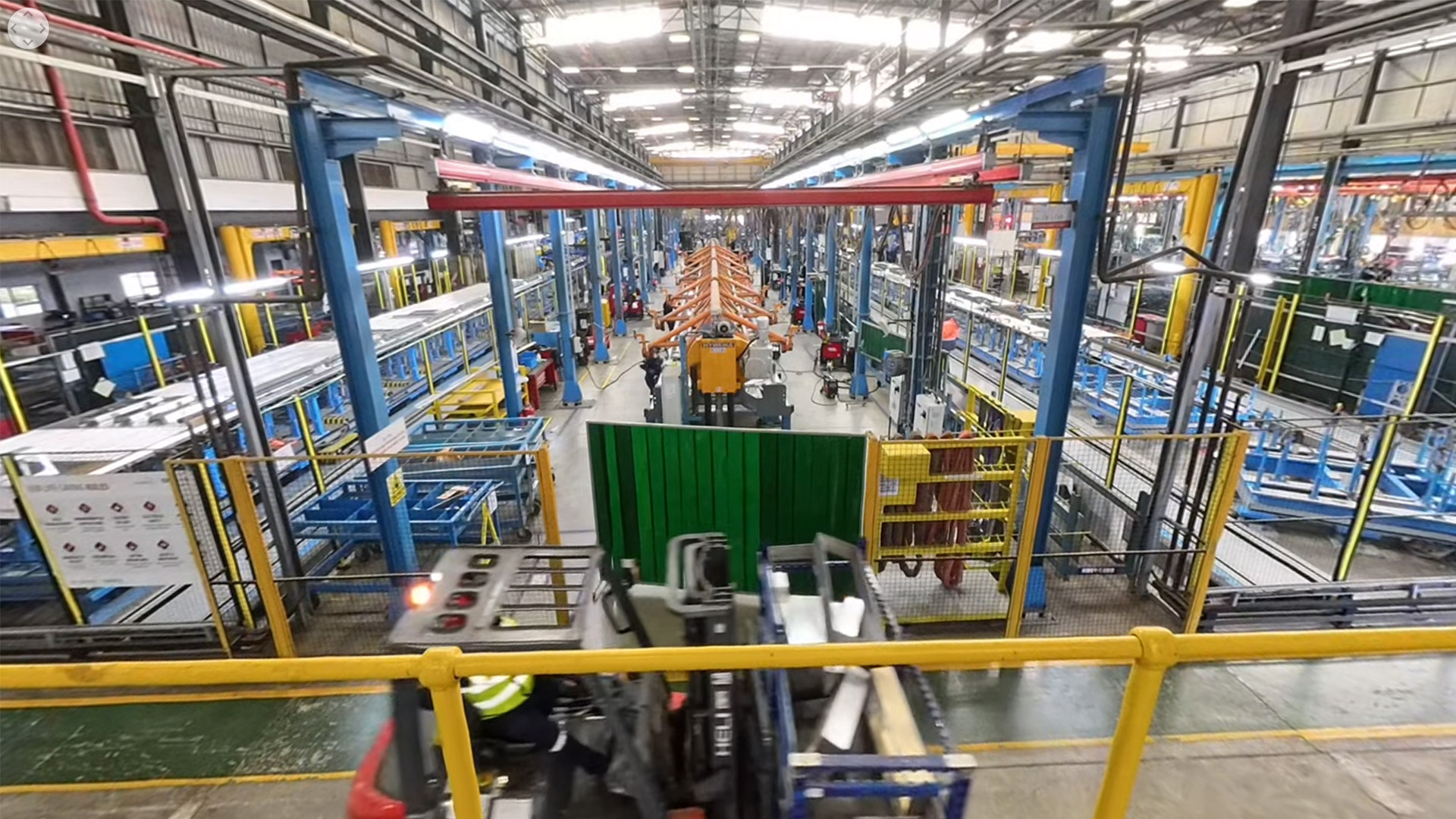
After cutting, components move to welding cells. Robotic welders—programmed with exact paths and parameters—perform initial butt and fillet welds on underframe sections to create rigid chassis frames. The high repeatability of robotic welding ensures uniform weld quality and reduces cyclic stresses. Manual welders then handle intricate joints—attaching brackets, gussets, and interior reinforcement points. Our footage captures welders wearing auto-darkening helmets, using TIG (tungsten inert gas) for precision joints on thin materials, and MIG (metal inert gas) for thicker seam welds. Quality inspectors conduct non-destructive tests—ultrasonic thickness checks and dye-penetrant inspections—to verify weld integrity before components advance to the next stage.
Mechanical Assembly: Chassis & Bogies
Once the fabricated frames receive initial weld approval, the assembly of chassis and bogies begins. A bogie—comprising wheelsets, axles, suspension springs, and brake systems—serves as the train’s running gear. In our video, automated guided vehicles (AGVs) transport bogie subassemblies to heavy-duty gantry cranes, which lower them onto precision jigs beneath the chassis frame. Skilled technicians align wheelsets within ±0.5 mm tolerance to ensure smooth track interface and minimize wheel wear over time.
Next, suspension components—coil springs, dampers, and air-bag systems—are installed to provide ride comfort and stability. Pneumatic brake lines are connected to each wheelset, and electronic sensors for temperature and pressure monitoring are affixed. The mechanical assembly segment also includes mounting traction motors onto bogie frames; these motors later receive electrical cabling and cooling ducts in subsequent integration phases. By capturing these steps in 360°, viewers see how heavy-duty hydraulic jacks and lifting fixtures support the nearly four-ton bogie subassemblies—underscoring both the scale and precision required in train assembly.
Systems Integration and Interior Installation
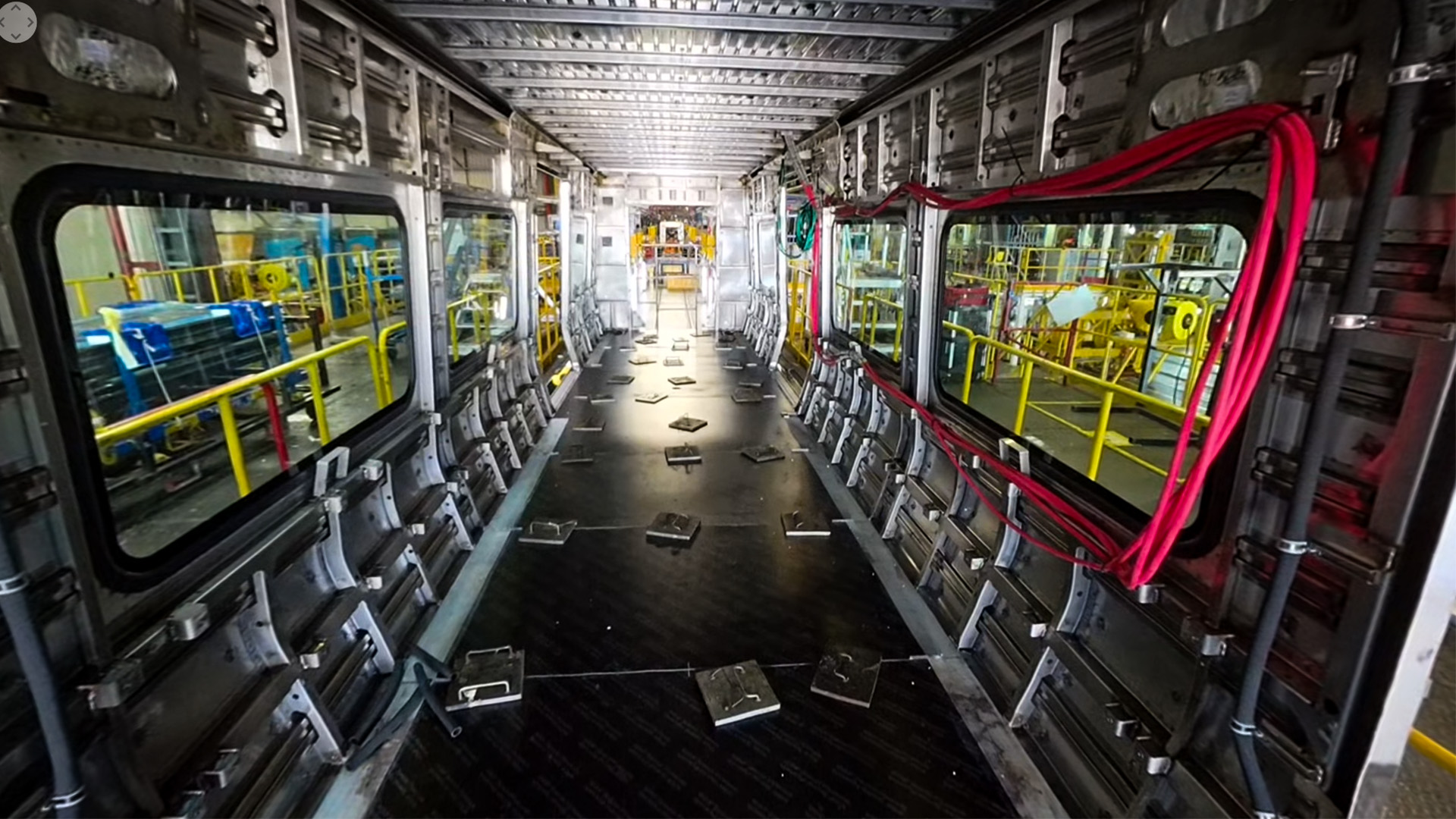
With chassis and bogies mated, the partially assembled train moves to systems integration. In this stage, high-voltage components—such as traction inverters, control cabinets, and main circuit breakers—are mounted within underfloor compartments. Overhead, roof-mounted pantographs and insulators are installed to connect to the 3 kV DC catenary system. Technicians route cable harnesses through protected trays, ensuring that power and signal lines are shielded from heat, moisture, and mechanical damage. Embedded sensors—temperature probes on traction motors, pressure gauges for pneumatic lines, and current meters—are calibrated and tested to communicate with the train’s central control unit.
Meanwhile, interior modules—flooring, wall panels, seating assemblies, and overhead luggage racks—are fitted into the bodyshell. Multiplex control systems connect passenger information displays, LED lighting fixtures, and air-conditioning vents to the central power bus. Flooring materials undergo fire-resistance tests, while seating modules—designed for durability and easy maintenance—are bolted to pre-drilled mounting points. By showcasing these integrations, the video highlights how mechanical, electrical, and ergonomic considerations converge to create a safe, comfortable passenger environment. The final segment of this stage features a static test where lighting, door actuators, and intercom systems are activated to verify functionality before painting and final testing.
Educational Value and Viewer Experience
Immersive Learning Benefits
One of the most compelling advantages of a 360° video is its ability to engage viewers through exploration. Unlike traditional point-and-shoot videos where the director controls the frame, 360° footage empowers viewers to decide where to look—encouraging active learning. In our Gibela factory tour, students of mechanical engineering or vocational training programs can examine weld seams, observe equipment layouts, and witness safety protocols in context—without physically being on the factory floor. This experiential learning fosters better retention of complex concepts such as quality-control processes, dimensional tolerances, and systems interdependencies.
Industry professionals also benefit. Maintenance engineers can revisit the video to recall equipment locations, cable routing paths, or access points for components—serving as a digital twin of the factory environment. Safety officers can analyze workflow ergonomics and hazard zones—helping refine standard operating procedures. By capturing the spatial relationships between workstations, machinery, and personnel, the 360° video conveys insights that static images or text descriptions simply cannot replicate.
Accessibility Features: Subtitles and Platforms
Ensuring broad accessibility was a key priority. The final 360° video incorporates time-synced subtitles to accommodate non-native English speakers and viewers with hearing impairments. Multiple language tracks—such as isiZulu, Afrikaans, and French—can be made available to serve diverse audiences across South Africa and neighboring countries. The video is hosted on YouTube, which supports 360° playback on desktop browsers, mobile devices, and VR headsets. By leveraging adaptive bitrate streaming (ABR), we ensure that viewers on slower internet connections can still access a smooth playback experience at 4K or 6K resolution, while those with high-bandwidth connections can enjoy 8K clarity.
For corporate and educational clients, Virtual Reality Durban provides secure hosting solutions—embedding the 360° video into learning management systems (LMS) or private intranet portals. These platforms support interactive hotspots—clickable markers that reveal additional information, technical specifications, or short explanatory clips when engaged. Hotspots enhance learning by allowing viewers to drill down into areas of interest—such as weld testing protocols or control cabinet wiring—without interrupting the overall narrative flow.
Practical Applications in Training Programs
Beyond general awareness, the 360° video serves as a virtual training module. Apprentices in welding schools can watch TIG and MIG welding techniques up close—pausing to observe wrist angles, torch travel speed, and weld bead profiles. Assembly line trainees can learn correct equipment handling, torque specifications, and alignment checks before performing hands-on tasks. By familiarizing learners with factory layouts and safety zones virtually, on-site training hours can be reduced—lowering operational risks and improving onboarding efficiency.
Moreover, maintenance teams can use the video to plan preventive maintenance schedules. For example, if a technician needs to service a traction motor, they can reference the video to locate mounting points, view cable routing, and understand the necessary clearance for lifting equipment. This upfront knowledge minimizes search time and reduces downtime—ultimately contributing to higher fleet availability and lower maintenance costs once trains enter revenue service.
Impact and Future Opportunities
https://www.youtube.com/watch?v=PxIcN6FUmPs
https://www.youtube.com/watch?v=PxIcN6FUmPs
The 360° video amplifies this impact by showcasing real-world examples of industrial capacity. Stakeholders—ranging from government officials to potential investors—can virtually tour the facility and witness production capabilities firsthand. This transparency builds confidence in South Africa’s ability to deliver large-scale infrastructure projects. Furthermore, the video can be used in trade exhibitions and investor conferences to highlight the nation’s commitment to modern, sustainable public transport solutions—potentially attracting additional funding for rail network expansion and maintenance programs.
Virtual Reality Durban’s Vision for Future Projects
Encouraged by the success of the Gibela video, Virtual Reality Durban aims to expand its 360° portfolio across multiple industries. In manufacturing, we plan to document automotive assembly, aerospace component production, and renewable energy installations—providing immersive training aids and promotional content. In tourism, we envision virtual safaris, heritage site tours, and cultural festival captures—offering accessible experiences to international audiences. Our long-term goal is to integrate mixed-reality overlays—combining 360° video with interactive 3D models, real-time data dashboards, and remote expert annotations—to create hybrid experiences that blend physical and virtual worlds seamlessly.
On the educational front, we aspire to partner with universities and vocational institutes to develop accredited online courses that leverage immersive content. For example, mechanical engineering students could earn credits for completing modules within our 360° factory tours—unlocking new pathways for remote learning and workforce development. By continuously refining our production workflows, audio-visual fidelity, and interactive features, we aim to make high-quality VR content more affordable and scalable—democratizing access to immersive media across South Africa and beyond.
How to Watch and Engage with the Content
To experience the Gibela 360° factory tour, viewers can visit YOUTUBE_2 on desktop or mobile devices. For an enhanced immersive experience, use any compatible VR headset—such as Google Cardboard, Oculus Quest, or Samsung Gear VR—by switching to VR mode in the YouTube app. This allows for head-tracking and stereoscopic depth perception, making viewers feel as if they are physically standing on the factory floor.
If you represent an educational institution, corporate training department, or government agency interested in customized 360° video projects, please visit our website at https://virtual-reality.durban/ and contact us at [email protected]. We offer full production services—from pre-production location scouting and safety planning to on-site capture, post-production editing, and interactive hotspot integration. By partnering with us, you can leverage immersive media to train your workforce, showcase industrial capabilities, or promote tourism initiatives in a compelling, innovative format.
Acknowledgments and Closing Remarks
Gratitude to Gibela and PRASA Teams
We extend our sincere thanks to Gibela’s management, engineering staff, and safety officers for granting us access to their facility and collaborating on every stage of this 360° production. Their openness in sharing proprietary processes, willingness to coordinate schedules, and commitment to workplace safety enabled us to capture the factory’s intricate workflows without hindrance. Special acknowledgment goes to quality assurance teams who meticulously guided us through non-destructive testing areas, ensuring that our filming did not compromise operational integrity.
Likewise, the Passenger Rail Agency of South Africa (PRASA) provided valuable oversight—reviewing each segment to guarantee that technical content remained accurate and aligned with service objectives. The combined efforts of Gibela and PRASA underscore South Africa’s dedication to modernizing commuter rail, creating local economic opportunities, and promoting transparent industry practices.
Final Reflections
This 360° video stands as a testament to the power of immersive media in bridging the gap between complex industrial processes and a broader audience. By enabling viewers to explore each weld, component installation, and system test from all angles, we create a shared context—whether for students learning foundational engineering principles or executives evaluating large-scale manufacturing investments. Our hope is that this virtual factory tour not only educates but also inspires future generations to pursue careers in STEM fields, driving continued innovation within South Africa’s rail and manufacturing sectors.
As Virtual Reality Durban looks ahead to new projects, we invite organizations across industries to consider how immersive storytelling can elevate their training, marketing, and community outreach efforts. Together, we can harness the transformative potential of 360° video to document progress, preserve knowledge, and engage audiences in ways previously unimaginable.
https://www.youtube.com/watch?v=PxIcN6FUmPs
https://www.youtube.com/watch?v=PxIcN6FUmPs
https://www.youtube.com/watch?v=PxIcN6FUmPs
Author: Elisha Roodt
Sharing the best of Virtual Reality Durban with local VR experiences, events, and immersive tech insights from Durban and KwaZulu-Natal.